
Note: This article was recovered from an earlier version of Technilube.com and republished to preserve useful information and site history. Some details, links, product information, terminology, and availability may reflect the original publication date.
Into the Intake, the PWM, and Inside the Car
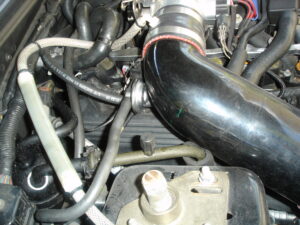 The tube heading into the engine has a flash suppressor, should there be a backfire, it will be caught here and protect the flame from reaching the resevoir which will be holding more hydrogen. This is a pretty safe system overall, hydrogen does not get stored, like what most of the hydrogen test vehicles currently being tested have. These have tanks storing hydrogen under high PSI, much like a propane tank. An HHO system makes the hydrogen as the engine runs and is consumed almost immediately with no storage when the system is off. There will be some changes to this setup in my car, which I will cover later and why.
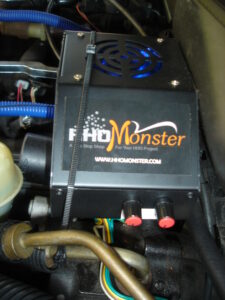
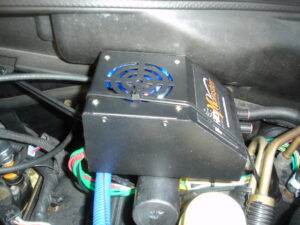
Towards the back of the engine on the driver’s side I mounted the PWM. From here the wiring gets distributed to the cells and the display inside the car. This is basically your brains which helps to control the production in the fuel cells and also keeping them cool, by balancing out the amps and frequency needed. Again, more on the new PWM soon.
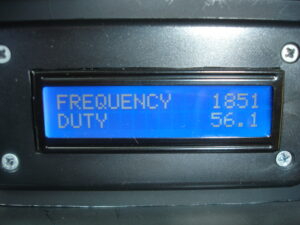
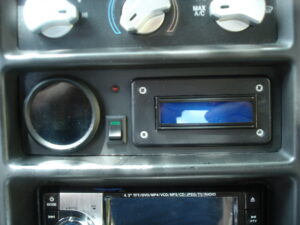 Inside the car I used an open stereo DIN slot I wasn’t using since I had changed out the stock stereo years ago. I made a plastic panel and mounted the digital readout which shows the Frequency the PWM is set for as well as the Duty. The Duty helps to determine the amperage draw on the system. You want to try and get the proper hydrogen output needed with as little amperage draw as possible. With this setup, a Duty right around 60 is good. This will fluctuate a little. The Frequency at this point is nearly pointless, since I have seen this thing going all over the place in readings and I believe it is related to the temperatures the PWM gets. There is different quality of hydrogen that can be produced, and if you locate the proper Frequency, which is nearly impossible without a sniffer in the tailpipe, you can fine tune that quality. A smaller amount of good quality hydrogen will perform better than a lot of bad quality. But with the various atmospheric conditions, temperatures, etc, it makes it difficult, and this PWM tends to fluctuate with heat, I found. However, the new PWM addresses this. Again, more later.
More in Part 3