A Little Curiosity About Hybrid Oil
Recently I was looking at the AMSOIL hybrid oils I place on display when I set up my booth. To be honest, I haven’t sold any myself, but then again, I’ve never been to an all-hybrid show either.
Usually it’s a classic car benefitting from the high zinc in the Z-Rod oils, the V-Twin Motorcycle Oils, or even just the standard Signature Series for the spectator coming by wanting a good product and one of the accounts that offers them a discount.
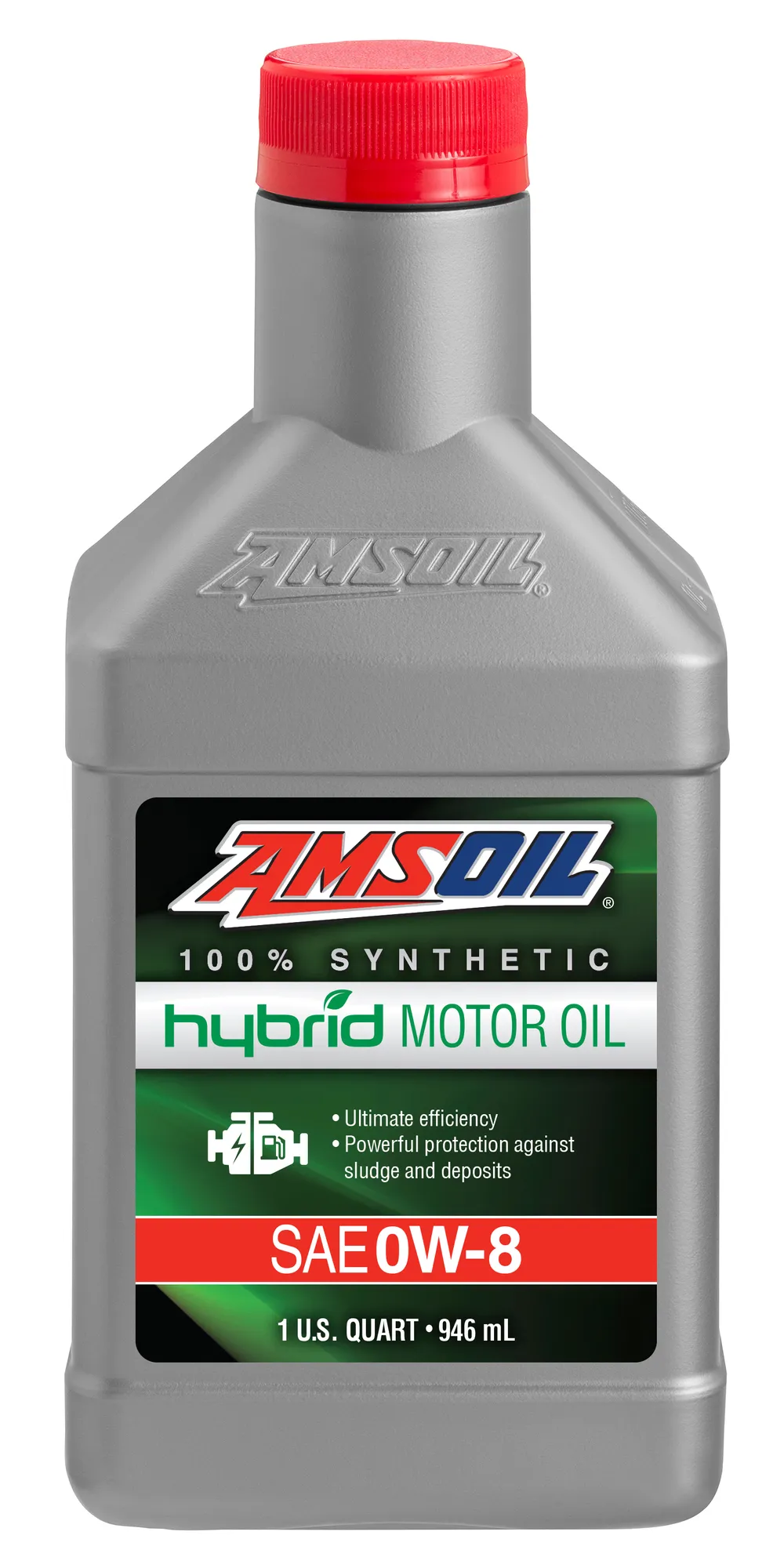
In fact, since most enthusiasts who stop by are more “old school” gearheads, when they see that 0W-8 hybrid oil, there’s usually a chuckle and a comment about it being water!
But today I started to wonder more. What exactly is a hybrid, and how do these oils address them?
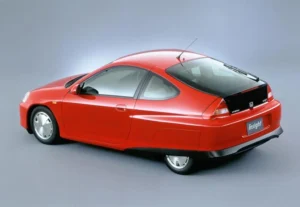 I remember decades ago the Toyota Prius and the Honda Insight. I liked the Honda. It looked like some futuristic car that entertained the sci-fi fan in me. I rarely see them anymore, but I still think they look cool.
Then the electric car came along, with Tesla bringing it into much wider public awareness. Nice-looking cars, but there were questions about driving range on batteries, as well as the cost of replacing them when they eventually wear out.
Being an old-school gas-engine guy, I could see the appeal of having one for everyday driving, but as something for the long haul?
And that’s where hybrids come in, and I can accept them more in my head. They combine both. I’ve ridden in both truck and “import” hybrids that coworkers I once worked with had, and the scary part was no engine sound. Is this thing even running? But the vehicle moved, and it was no slouch doing it. And they loved the gas mileage.
Okay, I can see having this. But what makes them tick? Do they all use this newer “hybrid” water being called an oil?
I’m not claiming to be an expert on these cars, but I thought I would share the information I learned looking up “what is a hybrid?” And also, since I’m an AMSOIL dealer and we carry oils, “what is a hybrid oil?”
This is what I found and learned.
What Exactly Is a Hybrid Vehicle?
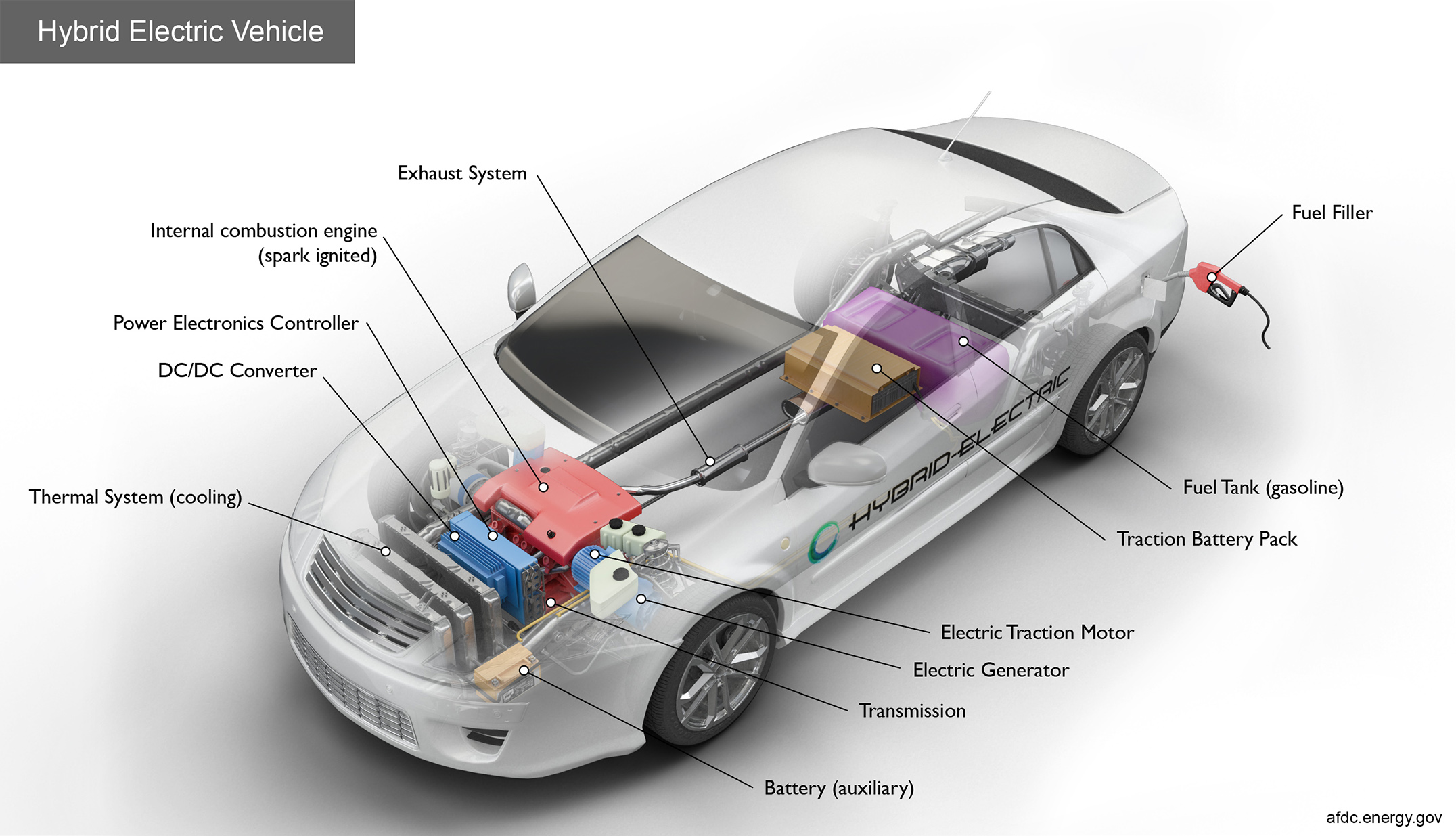
Before getting into the oil, it helps to understand what makes a hybrid different from a conventional gasoline-powered vehicle.
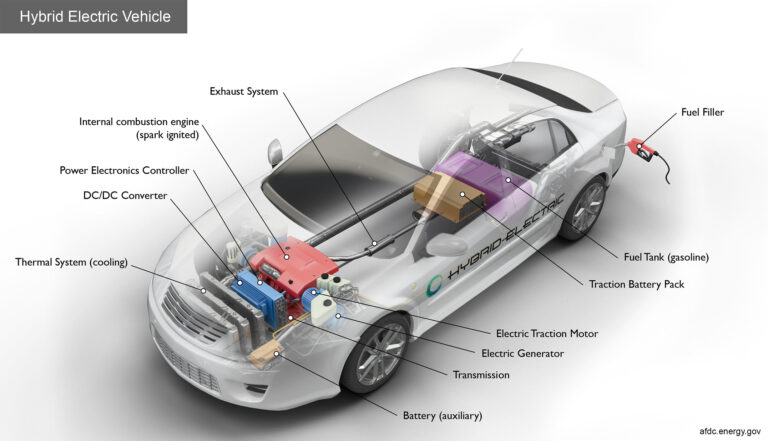
A hybrid combines an internal combustion engine (ICE) with one or more electric motors and a battery. The vehicle’s computer manages how these power sources work together to move the vehicle efficiently.
Depending on the design, the electric motor can help accelerate the vehicle, move it at certain speeds, recover energy while braking, or even power the vehicle without the gasoline engine running.
And then I learned there isn’t just one kind of hybrid.
Full Hybrid (HEV)
These are probably the hybrids most people think of first.
Toyota Prius, Camry Hybrid and RAV4 Hybrid models are familiar examples. Honda also has its Accord and CR-V hybrids.
A full hybrid can use its electric motor to move the vehicle under certain conditions, with the gasoline engine engaging when needed.
The battery is recharged through regenerative braking and the gasoline engine. You don’t plug a conventional full hybrid into an electrical outlet.
For most of us, we probably grew up with the rule not to ride the brakes because they get hot and you can warp rotors. Well, hybrids have another trick. When you slow down, their electric motor can work as a generator, converting some of that motion back into electricity to recharge the battery. Instead of throwing all that energy away as heat, they recover some of it!
Plug-In Hybrid (PHEV)
A plug-in hybrid takes the concept a step further.
It has a larger battery that can be charged externally, allowing it to travel a considerable distance using electric power alone before the gasoline engine is needed.
Examples include the Toyota Prius Prime and RAV4 Prime.
This creates an interesting situation for the gasoline engine. Depending on how the vehicle is driven and charged, the engine may operate intermittently rather than continuously.
Mild Hybrid (MHEV)
A mild hybrid uses a smaller electric motor-generator to assist the gasoline engine.
It can help with acceleration, stop-start operation and energy recovery, but generally cannot propel the vehicle solely on electric power.
Some Ford, BMW, Mercedes-Benz and Stellantis vehicles use mild-hybrid systems.
So while these vehicles all have some form of gasoline-electric assistance, they don’t all operate the same way.
And that brings us to the engine itself.
What Happens Inside a Hybrid Engine?
Here’s where things get interesting for those of us who have spent years around conventional engines.
A conventional gasoline engine generally runs whenever the vehicle is running. There are exceptions, of course, but that’s the basic idea. How many of us have driven that newer GM and that first time think the car died at the light because the engine turns off?
A hybrid engine can start, stop, restart and operate intermittently as the vehicle’s computer decides how best to use the available power.
That can mean the gasoline engine is frequently shutting down in traffic, restarting when additional power is needed, or operating for shorter periods depending on the driving conditions.
This creates some interesting lubrication considerations.
Moisture and Condensation
When an engine operates, moisture can accumulate inside the crankcase.
Under normal operating conditions, engine heat helps evaporate that moisture through the crankcase ventilation system.
But what happens when an engine repeatedly starts and stops, particularly during short trips?
It may not always reach or maintain the temperatures needed to evaporate accumulated moisture.
Excess moisture can contribute to corrosion, sludge and other unwanted deposits.
Most of us know that short stop and go commutes are worse for the engine, and especially on oil, than that 200 mile highway vacation trip. Same thing here.
Fuel Dilution
Another concern is fuel dilution.
Fuel dilution occurs when some unburned fuel makes its way past the piston rings and into the engine oil.
Cold starts, certain operating conditions and incomplete combustion can contribute to this.
Fuel in the crankcase can reduce the oil’s viscosity, potentially weakening its ability to maintain the protective film between moving engine components.
This isn’t simply a marketing argument created by oil companies. Researchers have actually studied how hybrid powertrains operate and how those operating patterns affect engine oil. One SAE technical paper, Hybrid Operation Characteristics and Their Impact on Engine Oil Requirements, examined different hybrid platforms and found that driving cycles influence engine temperature and the amount of water and fuel dilution found in engine oil samples.
The research helps explain why hybrid engines can present different lubrication challenges from conventional engines.
Frequent Starts and Restarts
Every time an engine starts, its lubrication system has to circulate oil to the components that need protection.
Hybrid engines can experience more frequent engine engagement and disengagement than conventional engines, depending on their design and driving conditions.
The oil must be capable of protecting the engine during these operating transitions.
What Are Hybrid Owners Actually Asking?
I wanted to look beyond what manufacturers and oil companies say and see what hybrid owners themselves are discussing.
Reddit turned out to be an interesting place to start.
Here are a few examples of the questions owners are asking.
Fuel Dilution in a Hyundai Santa Fe Hybrid
One owner shared used-oil analysis showing significant fuel dilution after an extended operating interval.
The discussion raised questions about how much fuel was entering the crankcase, how that affected viscosity and whether the oil interval was appropriate.
It’s one owner’s experience, not proof that all Santa Fe hybrids have the same problem. But it illustrates why used-oil analysis can be interesting.
What Oil Should a Hyundai Tucson Hybrid Use?
Another owner discussed choosing a hybrid-specific oil because of frequent short trips and concerns about fuel dilution and moisture.
Are Short Trips a Problem for a Honda Accord Hybrid?
A Honda Accord Hybrid owner raised a question about frequent trips of only a few miles.
Does the engine get hot enough to evaporate moisture? Does the gasoline engine run long enough to reach its normal operating temperature?
These discussions are interesting because they show that hybrid owners aren’t necessarily just looking for a particular brand of oil.
They’re trying to understand what happens inside their engines and whether their driving habits affect oil condition.
They share and have many of the same questions a lot of us car guys have had, but for their conditions, it might be even more important.
Does Every Hybrid Need Special Motor Oil?
Here’s where we need to be careful.
The short answer I found is no.
A hybrid vehicle doesn’t automatically require a special hybrid-branded motor oil.
The vehicle manufacturer’s requirements still determine which oil is appropriate. The correct viscosity and performance specifications matter more than whether the bottle says “hybrid” on the label.
 Here’s an interesting real-world example. The 2025 Toyota Grand Highlander Hybrid AWD, equipped with the standard 2.5L hybrid powertrain, specifies 0W-8 motor oil meeting the JASO GLV-1 specification. If 0W-8 isn’t available, Toyota permits 0W-16 temporarily, with a return to 0W-8 at the next oil change.
And this isn’t some tiny economy car. The Grand Highlander is a substantial family SUV, and the AWD version is rated to tow up to 3,500 pounds.
So that ultra-thin oil isn’t necessarily limited to little cars built strictly for fuel economy. It’s being used in a vehicle that can carry the family, their gear and even tow a boat.
See Toyota’s 2025 Grand Highlander Specifications
2025 Grand Highlander Owner’s Manual (pdf)
An oil that meets the vehicle manufacturer’s requirements can be appropriate whether it’s marketed specifically for hybrids or not.
So why buy hybrid-specific oil?
The idea is to select a formulation designed to address some of the additional operating conditions associated with hybrid engines.
This is where the distinction between meeting an engine’s minimum requirements and choosing a formulation designed around particular operating challenges becomes important.
Can Conventional Vehicles Use Hybrid Oil?
Potentially, yes.
A conventional gasoline vehicle may be able to use a hybrid-specific oil if the viscosity and required specifications are appropriate for that engine.
How Does AMSOIL Hybrid Motor Oil Address These Conditions?
Now we get to the reason I started looking at those bottles on my display in the first place.
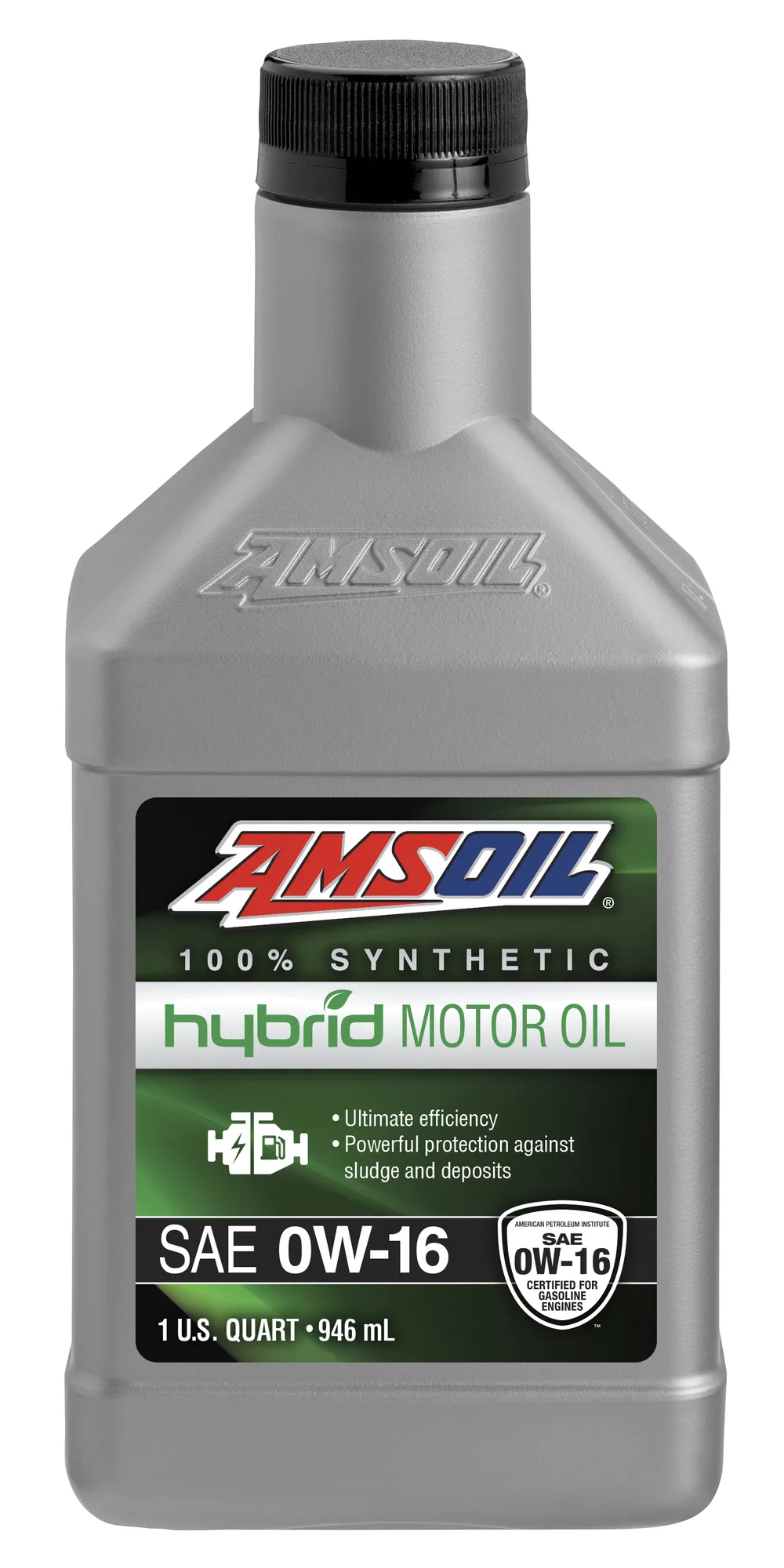
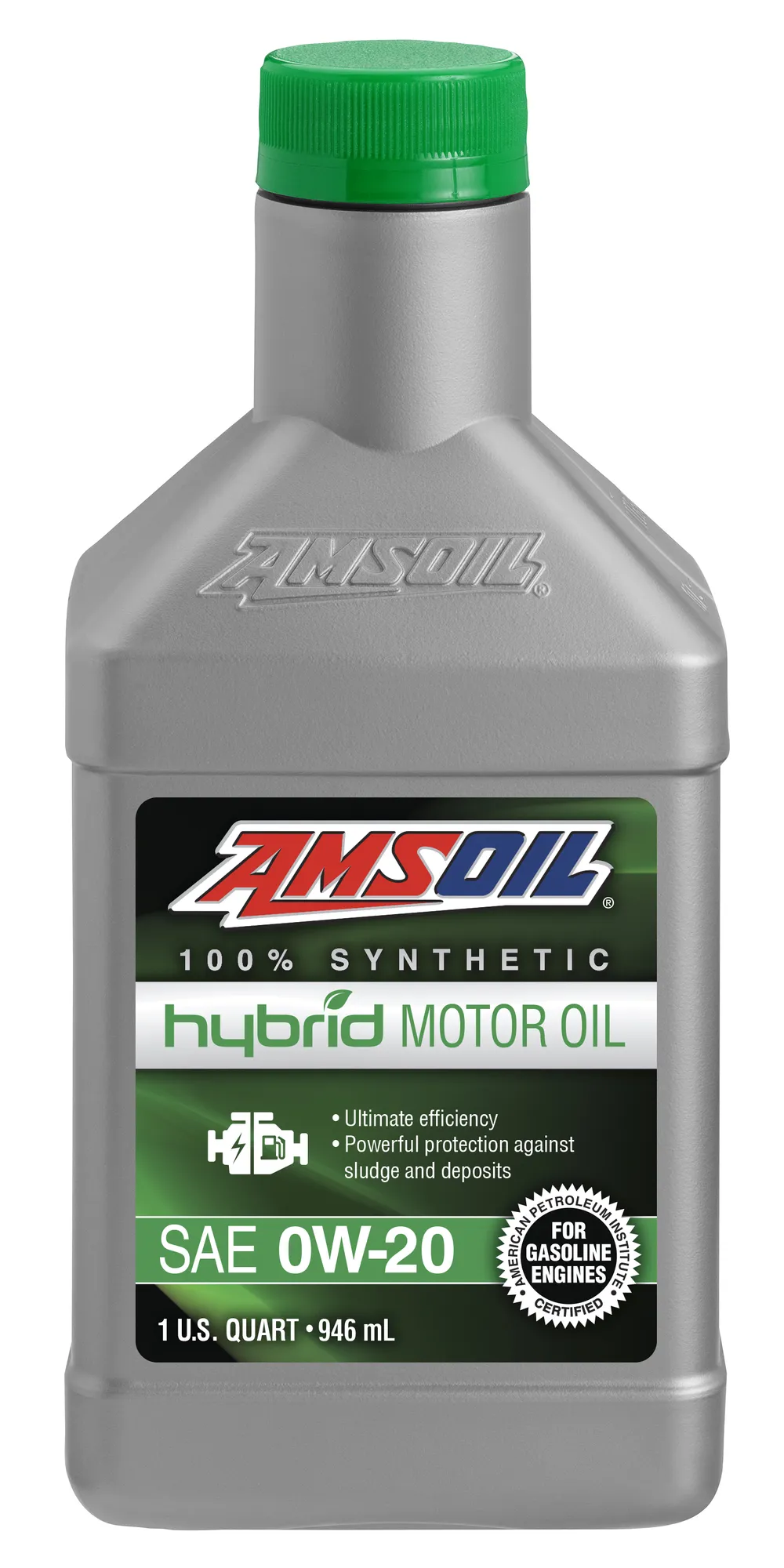
AMSOIL offers a line of 100% Synthetic Hybrid Motor Oil in three viscosities:
- 0W-8
- 0W-16
- 0W-20
These aren’t simply three different thicknesses of the same interchangeable oil. Each has its own applicable specifications and intended applications.