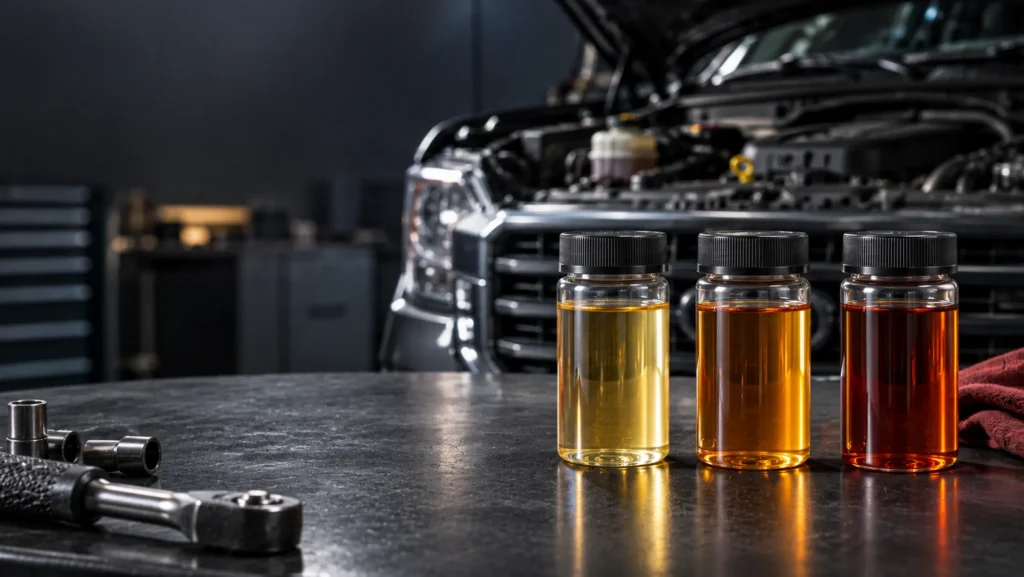
 The words “synthetic” and “full synthetic” appear on many motor-oil bottles, but they do not tell the complete story.
Motor oil is a carefully engineered combination of base oils and additives. The base oils make up most of the lubricant and provide its basic flow, lubrication and temperature characteristics. The additive system helps the finished oil control wear, deposits, oxidation, corrosion, foam, acidity and changes in viscosity.
Two oils can both be marketed as synthetic and still use different base-oil blends, different additive systems and different design priorities. That is why the label on the front of the bottle is only the beginning of the comparison.
What Motor Oil Does
Motor oil has several important jobs inside an engine. It must:
Lubricate moving engine parts
Help carry heat away from internal components
Keep contaminants suspended until they can be removed by the filter
Help control deposits, sludge and varnish
Protect against wear, corrosion and rust
Flow quickly during cold starts
Remain stable as engine temperature and load increase
Maintain the viscosity needed to protect engine parts
Modern engines and operating conditions can place significant demands on motor oil. Engine design, temperature, load, trip length and service interval all influence the protection an oil must provide.
Base Oils and Additives
Base oil is the main fluid portion of a motor oil. It provides much of the oil’s inherent ability to lubricate, flow in cold temperatures, resist evaporation and remain stable under heat.
Additives complete the formula. Depending on the application, an additive system may include detergents, dispersants, anti-wear agents, oxidation inhibitors, corrosion inhibitors, antifoam agents, viscosity modifiers and other chemistry designed to help the oil meet its required performance specifications.
A motor oil is not simply “base oil plus a few chemicals.” The base oils and additives are selected to work together as a system, and each manufacturer formulates its oils around particular performance, specification, application and cost targets. Changing one part of that system can affect the finished oil’s performance.

Understanding Base-oil Groups
The American Petroleum Institute (API) classifies lubricant base oils into five broad groups. These groups describe the base-oil family; they do not, by themselves, provide a complete ranking of finished motor oils.
Groups I, II and III begin with petroleum feedstock, although Group III is subjected to much more severe refining and chemical processing than Groups I and II. A process commonly associated with modern Group III base oils is hydrocracking, which uses hydrogen, heat and pressure to break down and rebuild portions of the original petroleum molecules into a more uniform, higher-performance base oil.
Group III base oils are widely used in modern lubricants sold as synthetic or full synthetic.
Group IV base oils are PAOs—chemically synthesized hydrocarbons known for molecular uniformity, strong low-temperature flow and high-temperature stability.
Group V is a broad category that includes esters and other specialty base-oil families. Esters may be used in lubricant formulations to contribute properties such as lubricity, solvency and high-temperature performance.
Why Base-oil Type Matters
Base-stock selection influences how an oil handles temperature, oxidation, evaporation and viscosity change.
Group II base oils are highly refined petroleum oils and remain common in conventional motor oils and many blends. They can provide solid performance when used in an appropriate formula and application.
Group III base oils are more severely refined, commonly through hydrocracking and related processes. They offer improved purity, uniformity and stability and are widely used in oils marketed as synthetic or full synthetic.
Group IV PAO base oils are chemically synthesized hydrocarbons known for molecular uniformity, strong low-temperature flow and high-temperature stability. They are often used in premium automotive and industrial lubricant formulations.
Group V materials, including certain esters, may be blended with other base oils to add specific properties such as lubricity, solvency and high-temperature performance.
Each base-oil group begins with different inherent capabilities. Those starting characteristics influence how much help the finished formulation needs to meet its intended performance level. The base oil, additive system, viscosity grade, required approvals and intended application must all work together. A premium finished oil is not created simply by adding a few high-quality additives to a low-tier base oil.
Why “Synthetic” is Not the Whole Answer
In the past, many people used the word “synthetic” mainly to describe PAO-based motor oils, which were once the expected foundation of a synthetic automotive oil.
Today, the term is used more broadly in the U.S. lubricant market. Highly refined Group III base oils are commonly used in products marketed as synthetic or full synthetic.
That does not mean all synthetic oils are identical. The label does not reveal the exact base-oil blend, additive system, performance reserve or design priorities of the finished product.
When comparing oils, it is more useful to ask:
Does the oil meet the viscosity grade required by the vehicle manufacturer?
Does it meet the required API, ILSAC, dexos or other OEM specification?
Is it designed for the vehicle’s engine type and operating conditions?
Does the manufacturer publish current technical information for the product and viscosity grade?
Is the oil appropriate for towing, turbocharged operation, extended idling, severe temperatures or other demanding use?
Look at the Complete Formulation
The correct viscosity grade and required specifications are the starting point when choosing motor oil. An oil must meet the requirements listed by the vehicle manufacturer.
API and other industry specifications establish the minimum performance standards an oil must meet for the stated classification or approval. Meeting the required specification is essential, but it does not necessarily reveal every design goal, published test result or performance reserve built into the finished oil.
Two oils may carry the same required approval while using different base-oil blends, additive systems and design priorities. As a result, one may provide stronger performance than another in particular tests or operating conditions beyond the minimum requirements of that approval.
Published technical information can give you more context. Depending on the product, that may include NOACK volatility, viscosity index, cold-flow properties, flash point, pour point, Total Base Number (TBN) and other measurements. No single number tells the complete story, but current technical data can help you make a more informed comparison.
For more information on one important heat-related property, read What Is the NOACK Volatility Test?.
Choose Oil for the Vehicle and Its Use
An oil that meets the required viscosity grade and specifications may be perfectly suitable for a lightly used vehicle operating under normal conditions.
The vehicle’s actual use still matters. Frequent short trips, long periods between drives, towing, heavy loads, long-distance driving, extended idling, high temperatures and turbocharged operation can increase the demands placed on motor oil.
A lightly driven vehicle is not automatically easy on oil. Long periods between drives can allow moisture, fuel dilution and corrosion concerns to become part of the maintenance decision. Mileage alone does not tell the whole story.
The goal is not to buy the most expensive oil automatically. It is to choose an oil with an appropriate level of protection for the vehicle, the manufacturer’s requirements and the way it is actually used. For many owners, spending modestly more for a product designed with additional performance capability can be reasonable insurance compared with the cost and inconvenience of an engine repair.
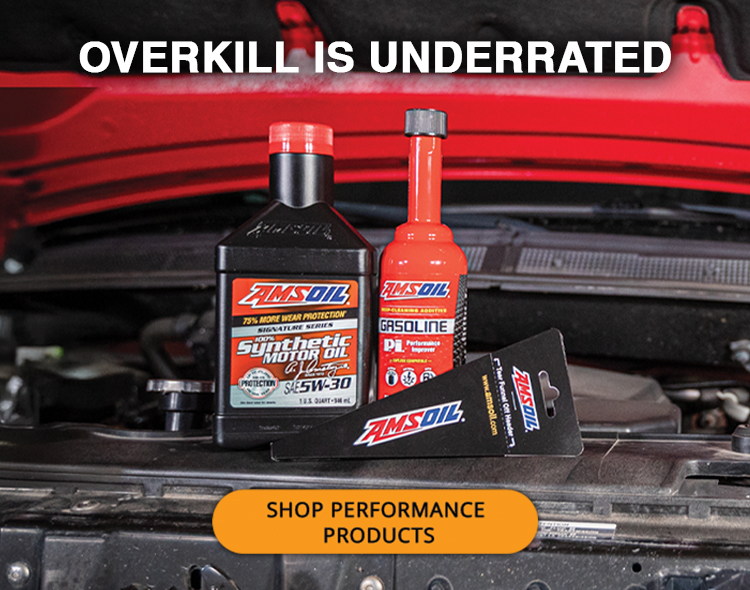
AMSOIL offers several gasoline-engine oil families for different needs, including OE for vehicles following manufacturer-recommended service intervals, Extended-Life for drivers seeking longer service capability, Signature Series for maximum protection and extended-drain capability where applicable, and High-Mileage formulas for older engines.
The correct product still depends on the exact vehicle, required viscosity grade and manufacturer specification.
For many owners, the difference in oil cost over a normal change interval is small compared with the cost and inconvenience of an engine repair. The goal is not to buy the most expensive product automatically—it is to use an oil that provides an appropriate margin of protection for the vehicle and how it is used.
Synthetic Oil and AMSOIL
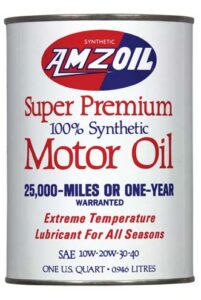 Synthetic lubricant technology was developed for demanding applications where conventional lubricants could have limitations in extreme temperatures and severe operating conditions.
AMSOIL founder Al Amatuzio saw the performance advantages of synthetic lubricants in aviation and believed that automotive engines could benefit from the same type of technology. After years of formulation and testing, AMSOIL 10W-40 Synthetic Motor Oil became the first synthetic motor oil in the world to meet American Petroleum Institute service requirements in 1972.
That history is one reason AMSOIL has remained focused on synthetic-lubricant technology. But the correct choice for any vehicle still begins with the manufacturer’s required viscosity grade and specifications.
If you would like help selecting the correct AMSOIL product for your vehicle or equipment, contact me.
Originally published September 2026. Technical information, product formulations, industry specifications, approvals and vehicle-manufacturer requirements can change. This article should be reviewed and updated as needed. Always verify current owner’s-manual requirements and the applicable product data bulletin.